What Does “Held at Customs” Mean? The Complete Fix Guide
Held at customs is one of those tracking updates that manages to sound both official and completely unhelpful at the same time. It tells you something has stopped, but it doesn’t tell you why, and it definitely doesn’t tell you what to do next. The good news is that held at customs almost always has a specific, identifiable cause, and in the majority of cases, there’s a specific, identifiable fix too.
In this guide, we’ll break down exactly what held at customs means, how it’s different from similar-sounding statuses, the real reasons a package ends up held at customs in the first place, and the exact steps to resolve it for USPS, FedEx, UPS, and DHL shipments specifically. By the end, you’ll know precisely what to do the moment you see held at customs on your own tracking page.
What “Held at Customs” Actually Means
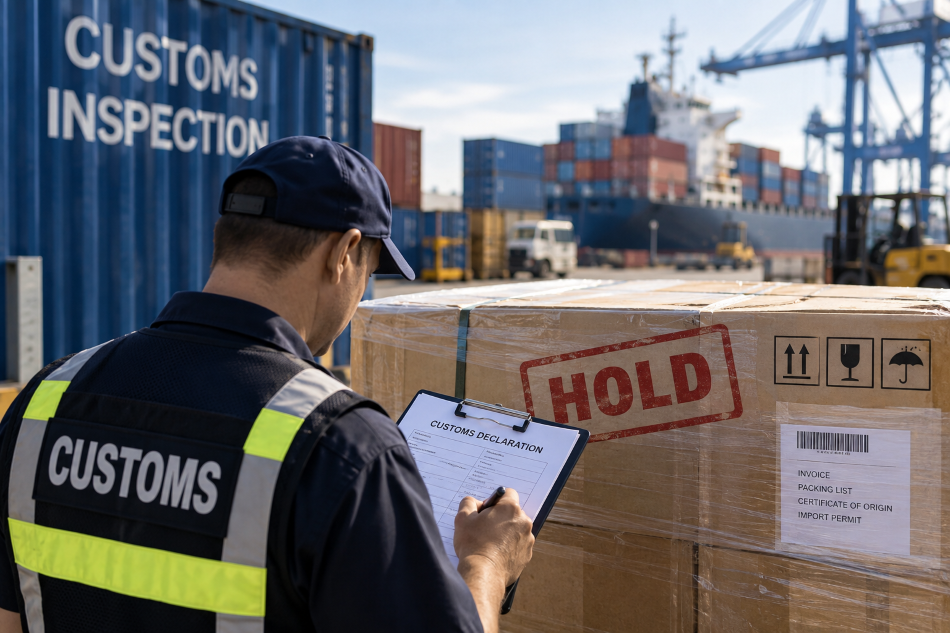
Held at customs means a shipment has reached the destination country’s border authority and has not yet been cleared for onward delivery. According to FedEx’s own official explanation, a package held at customs is typically missing paperwork, waiting for clearance instructions, or the authorities simply need more information before they can release it. When a shipment is held at customs, FedEx states plainly that it will directly contact either the recipient or the shipper, whichever party is responsible for supplying the missing information, rather than leaving the package to sit indefinitely with no path forward.
This is genuinely important to understand: held at customs is not a random, unexplained system glitch. It’s a specific compliance checkpoint waiting on a specific action, usually from you or the shipper, before it can proceed.
“Held at Customs” vs. Similar Tracking Statuses
Different carriers word this milestone slightly differently, which adds to the confusion. Here’s how the most common variations relate to each other:
- “Arrived at Customs” or “Inbound to Customs” simply confirms the package has reached the customs facility, before any review has actually started.
- “Customs Clearance in Progress” means the review is actively underway, but no issue has necessarily been found yet.
- “Held at Customs” or “Held for Inspection” specifically means the review has stalled on something, missing documentation, an unpaid duty, or a flagged item, rather than proceeding normally.
- “Customs Cleared” or “Released by Customs” confirms the package has successfully passed review and is now free to continue toward final delivery.
Held at customs sits squarely in the “something needs your attention” category, which is exactly why it deserves a faster response than the earlier, more passive statuses in this sequence.
What the Notification Actually Tells You
When a shipment is held at customs, the notice you receive, whether by email, text, or postal mail, typically falls into one of a few categories, and recognizing which one you’ve received tells you exactly what to do. A documentation notice asks for a corrected invoice, declaration, or product certificate. A duty notice specifies an amount owed and a payment method. An inspection notice simply informs you that a physical review is underway and usually requires no action at all beyond waiting. Reading the notice carefully before reacting saves a genuine amount of time, since a duty notice and a documentation notice require completely different responses even though both simply show up as held at customs on the public tracking page.
Personal Shipments vs. Commercial Shipments: Does It Matter?
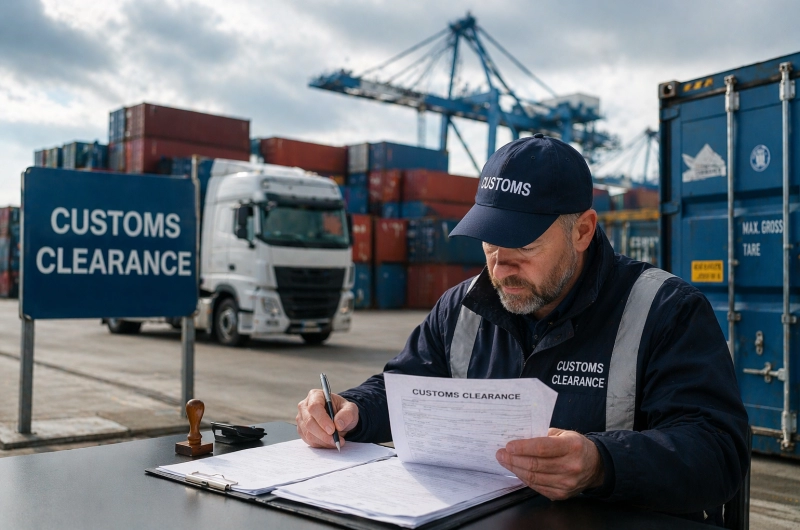
Yes, meaningfully. A personal gift or purchase held at customs is generally resolved through a simple duty payment or a brief documentation request handled directly by the recipient. A commercial shipment held at customs, by contrast, often requires a formal entry process, particularly once the shipment’s declared value crosses a country-specific threshold, which can involve a licensed customs broker, additional tariff classification paperwork, and a notably longer resolution window, sometimes several weeks rather than a few days. If you’re a business shipping internationally at any real volume, understanding this distinction upfront, and working with a broker before a shipment is ever held at customs, prevents the vast majority of these longer commercial delays.
The Real Reasons a Package Gets Held at Customs
1. Missing or Incomplete Paperwork
This is by far the most common reason a shipment ends up held at customs. A missing commercial invoice, an incomplete customs declaration form, or absent supporting documents for a specific product category can each independently trigger a hold.
2. An Inaccurate or Undervalued Declaration
When the declared value on a customs form looks inconsistent with the actual item being shipped, customs officials frequently place the package on hold at customs until the discrepancy is resolved or clarified.
3. Unpaid Duties or Taxes
A shipment can be held at customs purely because assessed duties or taxes haven’t been paid yet, regardless of how complete the paperwork otherwise is.
4. A Missing HS Code or an Incorrect One
An inaccurate Harmonized System code is a frequent trigger, since it directly determines how a product is classified, taxed, and regulated.
5. Restricted or Regulated Items
Certain electronics, food products, cosmetics, and specific chemical or battery-containing goods are commonly held at customs for additional certification or safety review, even when every other document is in order.
6. Random Compliance Inspection
A percentage of shipments are simply selected for physical inspection as part of routine enforcement sampling, independent of documentation quality.
7. Missing Importer or Exporter Identification
Many countries now require formal importer-of-record or similar registration numbers directly on the customs paperwork, and a shipment can be held at customs indefinitely until that number is supplied.
Why This Is More Common in 2026 Than It Used to Be
Following the suspension of the $800 U.S. de minimis exemption in August 2025 and its global expansion in April 2026, far more low-value shipments now require full formal customs review than in prior years. Packages that once cleared automatically under the old exemption are now genuinely eligible to be held at customs for the same documentation and duty reasons that previously applied only to higher-value commercial shipments. Our detailed guide on how long a package can legally sit in customs covers this policy shift in full.
How to Fix “Held at Customs”: Step-by-Step
- Check your email and the carrier’s app for a specific notice. Most carriers, including FedEx and DHL, will proactively reach out with the exact reason a shipment is held at customs and what’s needed to resolve it.
- Identify whether it’s a documentation issue or a duty issue. These require completely different fixes, so knowing which one you’re dealing with saves significant time.
- Provide any missing documents immediately. A corrected invoice, a completed declaration form, or a specific product certificate can often be submitted digitally within minutes.
- Pay any outstanding duties or taxes promptly. Most held at customs situations tied to unpaid duties resolve within 1 to 3 business days of payment.
- Contact the carrier directly if you haven’t received a specific notice. Reference your tracking number and ask specifically what’s required to release a shipment currently held at customs.
- Confirm the correct HS code was used, and request a correction from the shipper if it appears to be wrong.
- Track the resolution in real time using a consolidated tool like SwiftGrid Express, so you can see the moment a held at customs status transitions back to active movement.
How Long Does “Held at Customs” Typically Last?
Once the underlying issue is actually addressed, most shipments clear within 1 to 3 business days. The real variable isn’t the customs review itself, it’s how quickly the missing information or payment gets provided. A shipment held at customs purely for a documentation request can sit indefinitely if nobody responds to the carrier’s notice, while the same shipment often clears within 24 hours once the requested paperwork is submitted. If you’re wondering about the true outer legal limit before a genuinely abandoned shipment faces confiscation or auction, our detailed breakdown of how long a package can legally sit in customs covers that much longer timeline in full.
Carrier-Specific Fix Instructions
USPS: International shipments held at customs through USPS’s network typically arrive with a completed CN22 or CN23 customs declaration form already attached, and CBP’s International Mail Branch reviews that form on arrival. As one detailed guide to USPS import duties and detained packages explains, if a package is held at customs because a formal entry is required, commonly triggered once a shipment’s declared value crosses a higher threshold, CBP will send written notification explaining the reason and how to secure release, though this process can occasionally take several weeks. If you believe a duty assessment is incorrect, you generally have the option to refuse delivery and submit a written protest to the holding post office within a short window, typically just a few days, which forwards your case back to CBP for review.
FedEx: FedEx explicitly states that when a shipment is held at customs, it contacts either the recipient or the shipper by email, and documents can be submitted in reply to that same message or through FedEx’s contact form directly.
UPS: UPS typically requires duty payment or documentation submission through its own online brokerage portal, and a package held at customs on a UPS shipment can usually be resolved by logging into that portal directly with your tracking number.
DHL: DHL frequently requires an Importer of Record number or specific certification for certain product categories, and its customer service team can clarify exactly what’s needed for a shipment currently held at customs on their network.
“Held at Customs” Around the World: Different Names, Same Idea
The exact wording changes by country, but the underlying concept, a shipment paused pending a specific action, stays consistent. In the United Kingdom, HM Revenue and Customs typically labels this a clearance query rather than using the phrase held at customs directly, but the resolution process, providing documentation or paying assessed VAT, is functionally identical. In Canada, the Canada Border Services Agency reviews inbound parcels and will hold a shipment until duties and taxes are settled, with unpaid amounts sometimes deducted directly from a refund if the recipient refuses the package. Across the European Union, national customs authorities each manage their own review queues independently, though the July 2026 elimination of the EU’s duty-free import threshold means far more shipments across the bloc are now subject to the same kind of hold that higher-value commercial imports have always faced.
What Happens If You Ignore a “Held at Customs” Notice
If a shipment remains held at customs with no response to a documentation or duty request, most carriers will hold it at a bonded warehouse for a limited window, commonly 5 to 10 business days, before initiating a return to the original sender. If the shipment continues to go unaddressed after that, it eventually proceeds toward formal abandonment procedures, which can ultimately result in confiscation or public auction under the destination country’s customs law. In other words, a package held at customs doesn’t resolve itself through waiting; it resolves through action.
How to Avoid This on Future Shipments
If you ship internationally on a regular basis, a few habits meaningfully reduce how often a package ends up held at customs:
- Double-check the HS code for every product category before printing a shipping label.
- Use complete, accurate commercial invoices that match the actual declared value and contents.
- Register for required importer or exporter identification numbers ahead of time for markets where they’re mandatory.
- Choose Delivered Duty Paid (DDP) shipping where available, which settles duties upfront and removes one of the most common triggers entirely.
- Work with a dedicated customs brokerage partner for recurring international shipping lanes, since a broker familiar with a specific country’s requirements can catch issues before a shipment is ever held at customs in the first place.
- Keep product descriptions specific rather than vague. A generic description like “gift” or “parts” is far more likely to trigger a hold than a precise, accurate description of the actual contents.
- Retain proof of value for higher-priced items, such as a receipt or invoice copy, since customs officials may request supporting evidence if a declared value is questioned.
If international compliance delays are a recurring cost for your business, SwiftGrid Express’s cross-border customs brokerage service is specifically built to prevent shipments from being held at customs due to avoidable documentation errors.
A Real Example Walkthrough
Here’s a fairly typical scenario. A small business ships a batch of skincare products internationally. Two days after departure, tracking updates to held at customs. The seller checks their email and finds a notice from the carrier requesting a certificate confirming the product ingredients meet the destination country’s cosmetic safety standards, a document that wasn’t included with the original shipment.
The seller uploads the certificate the same day. Twenty-four hours later, the shipment clears and resumes transit, arriving only three days behind the original estimate. The package was never actually lost or at serious risk, it was simply held at customs waiting on one specific, fixable piece of information the whole time.
How SwiftGrid Express Helps You Resolve “Held at Customs” Faster
The hardest part of dealing with a shipment held at customs is usually just figuring out what’s actually needed and how far along the resolution process is. SwiftGrid Express consolidates customs-stage status updates alongside standard carrier tracking, so you can see clearly whether a shipment is genuinely held at customs for a documentation reason, a duty reason, or an inspection, rather than guessing from a single vague line on a tracking page. You can check a shipment’s full status through SwiftGrid Express at any point, and if you want the complete picture of how international tracking works from origin to final delivery, our guide on how to track an international shipment walks through the entire journey. If your shipment isn’t customs-related at all and simply seems delayed somewhere in the wider network, our broader guide on why packages get stuck in transit covers the non-customs causes of that same kind of frustrating delay.
Frequently Asked Questions
Does held at customs mean my package will be returned?
Not necessarily. Held at customs simply means the shipment needs a specific action, usually documentation or duty payment, before it can be released. Returns typically only happen if the request goes unaddressed for an extended period.
How do I know exactly why my package is held at customs?
Check your email and the carrier’s app first, since most carriers proactively send a notice explaining the specific reason. If nothing arrives within a day or two, contact the carrier directly with your tracking number.
Will I have to pay extra fees if my package is held at customs?
Possibly. If the hold is duty-related, you’ll need to pay the assessed amount. If it’s purely a documentation issue, there’s often no additional cost beyond providing the missing paperwork.
How long can a shipment stay held at customs before something bad happens?
Practically speaking, most shipments resolve within days once the requested information is provided. Left completely unaddressed, a held at customs shipment can eventually be returned, and in extreme cases, confiscated or auctioned under the destination country’s customs law.
Is held at customs the same as being lost?
No. A lost package generally has no scan history at all at its expected location. Held at customs specifically confirms the package has arrived and is sitting at a known, specific checkpoint.
Can I speed up a package that’s held at customs by paying extra?
Paying express shipping fees doesn’t bypass customs review, but promptly paying any assessed duties and providing requested documents is the single fastest way to move a held at customs shipment forward.
Do all countries use the exact phrase “held at customs”?
No. Wording varies by carrier and country, with some using “Held for Inspection,” “Clearance Delay,” or similar phrasing to describe the same essential status.
What if I never receive a notice explaining why my package is held at customs?
Contact the carrier directly and reference your tracking number. Support teams can usually see the specific internal reason even when the public tracking page doesn’t display it clearly.
Is a commercial shipment more likely to be held at customs than a personal package?
Not necessarily more likely, but when a commercial shipment is held at customs, the resolution process is often longer and more involved, particularly if a formal entry or licensed broker is required.
Can I refuse a package that’s held at customs if I disagree with the duty amount?
In many cases, yes. Most postal and courier systems allow you to refuse delivery and file a formal protest within a short window, though the exact process and deadline vary by carrier and country.
Final Thoughts
Held at customs sounds alarming, but it’s almost always a solvable, specific problem rather than a genuine crisis. Identify whether the hold is about documentation, duties, or inspection, respond quickly, and most shipments held at customs move again within a matter of days. If you’d rather see exactly where a shipment stands instead of waiting anxiously for an update, SwiftGrid Express gives you the full picture the moment a package is held at customs, so you know exactly what to do next.