

International Shipment Tracking: How to Track Your Cargo
International shipping involves multiple stages, carriers and transportation networks. Whether you are waiting for a package from another country, monitoring a business shipment or following commercial cargo across oceans, knowing where your shipment is can make the entire delivery process less stressful.
Fortunately, international shipment tracking makes it possible to monitor many shipments from dispatch to delivery. Depending on the carrier and shipping method, you may be able to view the latest location, transportation milestones, customs updates, estimated delivery dates and other important information.
However, tracking an international shipment is not always as simple as entering a number and watching its location update in real time. Different carriers use different systems, shipment identifiers and tracking processes. A parcel shipped by express courier may have a different tracking experience from a container transported by ocean freight.
In this guide, you will learn how international shipment tracking works, how to track your package or cargo, where to find the correct tracking number, what common shipment statuses mean, why tracking updates sometimes stop and how to resolve tracking problems. You will also discover the differences between parcel, air freight and ocean freight tracking.
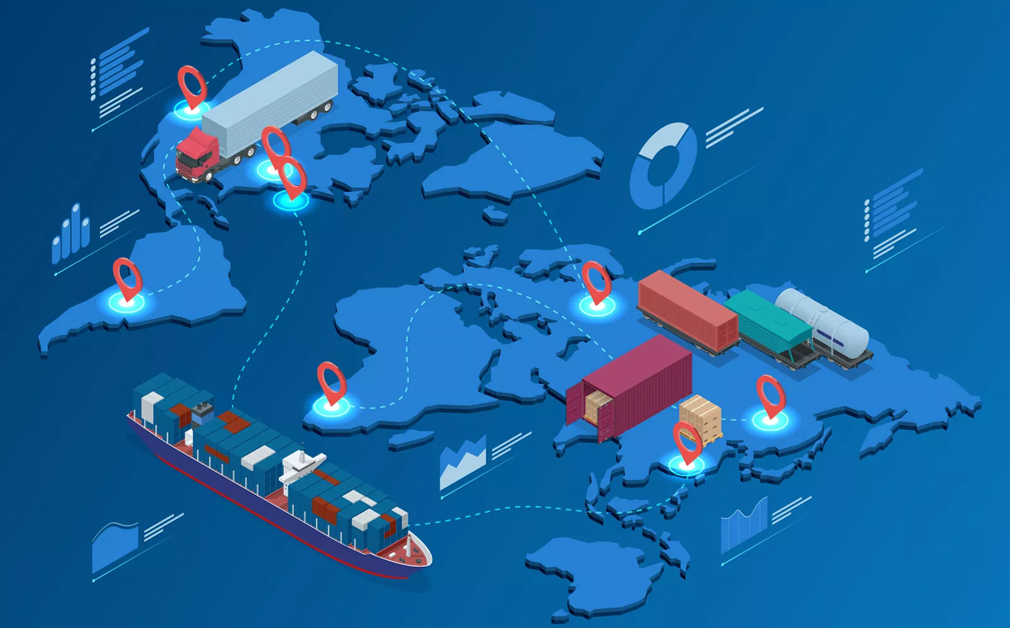
International Shipment Tracking: The Basic Process
International shipment tracking allows you to follow a shipment through the transportation network using a tracking number, reference number or another shipment identifier.
The basic tracking process is:
- Find your tracking number or shipment reference.
- Identify the carrier or logistics provider.
- Open the carrier’s official tracking website.
- Enter the tracking information exactly as provided.
- Review the latest shipment status and location.
- Check customs, transportation and delivery updates.
- Contact the seller, carrier or freight forwarder if the shipment stops moving.
For example, if your package was shipped through FedEx, you can use the FedEx shipment tracking page. If your cargo is being transported through Maersk, you can use the company’s official shipment tracking guidance.
The exact tracking process depends on the shipping method, carrier, destination country and type of cargo.
A courier package may display frequent scans, while an ocean container may show important milestones such as vessel departure, transshipment and arrival at the destination port.
1. Find the Correct Tracking Number
The first step in international shipment tracking is finding the correct identifier for your shipment.
A tracking number is a unique reference used by a carrier or logistics provider to identify a shipment. It allows the transportation company and, in many cases, the customer to retrieve shipment information from a tracking system.
Your tracking number may be provided by:
- The online seller.
- The shipping company.
- The freight forwarder.
- The courier.
- The postal service.
- The warehouse or fulfillment provider.
- The person who sent the shipment.
Where to find your international shipment tracking number
Check the following documents and messages:
- Shipping confirmation email.
- Order confirmation message.
- Dispatch notification.
- Courier receipt.
- Commercial invoice.
- Air waybill.
- Bill of lading.
- Freight booking confirmation.
- Customer account dashboard.
- Text message from the carrier.
For online purchases, the seller’s order dashboard or shipping confirmation email is often the first place to look.
For commercial cargo, the tracking identifier may be found in the transport documents supplied by the freight forwarder or carrier.
Common types of shipment identifiers
Not every international shipment uses the same tracking number.
Parcel tracking number
Parcel tracking numbers are commonly used for courier and postal shipments.
They may contain letters, numbers or a combination of both.
Example:
AB123456789CDThe example above is illustrative only. Always use the actual tracking number issued for your shipment.
Air waybill number
Air freight commonly uses an air waybill, also known as an AWB.
An air waybill is a transport document associated with an air cargo shipment. It helps identify the shipment and supports the transportation process between the shipper, carrier and consignee.
An air waybill may contain information associated with:
- The airline.
- The freight forwarder.
- The shipper.
- The consignee.
- The origin airport.
- The destination airport.
The tracking process depends on the airline or freight provider handling the shipment.
Bill of lading number
Ocean freight commonly uses a bill of lading.
A bill of lading is an important transport document used in the movement of goods by sea. Depending on the shipping arrangement, it may be issued by the shipping line or freight forwarder.
Maersk explains that certain shipments and containers can be tracked using shipment or container information through its tracking tools. You can review its shipment tracking instructions.
Container number
A container number identifies a specific shipping container.
It is particularly useful when tracking:
- Full-container-load shipments.
- Ocean freight.
- Port movements.
- Transshipment.
- Container discharge.
- Inland transportation.
A container tracking search may require the shipping line, booking number or another reference, depending on the system.
Carrier reference number
Some carriers and logistics providers allow customers to search using a reference number.
However, a carrier reference number is not always the same as a parcel tracking number.
If you are unsure which identifier to use, ask the sender or freight forwarder:
“Which number should I use to track this shipment, and which carrier’s website should I use?”
Order number versus tracking number
An order number identifies your purchase with a seller. A tracking number identifies the shipment moving through a transportation network.
For example:
| Identifier | What it identifies |
|---|---|
| Order number | Your purchase from an online store. |
| Tracking number | A parcel being transported. |
| Invoice number | A commercial transaction. |
| Booking number | A transport reservation. |
| Container number | A specific shipping container. |
| Bill of lading number | A transport document and shipment. |
Entering an order number into a courier tracking page may produce no result because the carrier may require the actual shipment identifier.
2. Identify the Carrier Handling Your Shipment
The second step in international shipment tracking is identifying the company responsible for transporting your shipment.
Possible carriers and logistics providers include:
- DHL.
- FedEx.
- UPS.
- USPS.
- National postal services.
- Maersk.
- MSC.
- CMA CGM.
- Emirates SkyCargo.
- Regional trucking companies.
- Freight forwarding companies.
- Local last-mile delivery providers.
Why the carrier matters
Your shipment may pass through several transportation companies before reaching its destination.
For example, an international parcel could be:
- Collected by a local courier.
- Transported to an export warehouse.
- Handed to an international carrier.
- Processed through customs.
- Transferred to a postal operator.
- Delivered by a local courier.
Because of these handovers, the original tracking page may not display every event in the destination country.
The company that accepted your shipment at origin may not be the same company responsible for final delivery.
Where to find the carrier name
Look at:
- Your shipping confirmation email.
- The shipping label.
- The seller’s order dashboard.
- The waybill.
- The invoice.
- The courier notification.
- The first tracking event.
If the seller gives you a tracking number without identifying the carrier, contact the seller and request the carrier’s name.
For compatible international postal barcodes, the International Post Corporation tracking service can help direct users toward relevant postal tracking resources.
3. Use the Carrier’s Official Tracking Website
Once you know the carrier, open its official tracking website.
This is one of the most important steps in international shipment tracking because it helps you access information from the company responsible for your shipment.
Avoid relying entirely on random tracking websites, social media messages or links sent by unknown individuals.
Third-party tracking platforms may be useful for consolidating shipment information, but the carrier’s official tracking system is generally the appropriate source for shipment-specific updates.
Examples of official tracking resources
- FedEx shipment tracking
- Maersk shipment tracking
- DHL eCommerce tracking FAQ
- Deutsche Post and DHL tracking
- Canada Post international tracking
What information can a tracking website provide?
Depending on the carrier and service, the tracking page may display:
- Shipment acceptance.
- Origin scan.
- Pickup confirmation.
- Departure information.
- Arrival at an international hub.
- Customs processing.
- Delivery attempt.
- Estimated delivery date.
- Proof of delivery.
- Exception notices.
- Contact instructions.
Some carriers also allow customers to:
- Save shipments.
- Receive notifications.
- Track multiple packages.
- View delivery preferences.
- Download proof of delivery.
- Request an investigation.
For example, FedEx provides online shipment tracking tools that allow customers to access tracking information.
Be careful with fake tracking websites
Scammers sometimes send fake delivery messages claiming:
- Your parcel is stuck.
- You must pay a customs fee immediately.
- Your address is incorrect.
- Your package will be returned.
- You must click a link to release the shipment.
Before paying anything or entering personal information, open the carrier’s official website independently.
Do not rely solely on a suspicious text message or email link.
A genuine tracking number does not automatically make every payment request legitimate.
4. Enter the Tracking Number Correctly
After opening the official tracking page, enter your tracking number exactly as provided.
Check for:
- Incorrect letters.
- Missing numbers.
- Extra spaces.
- Confused characters such as
0andO. - Confused characters such as
1andI. - Hyphens.
- Incorrect shipment references.
- Copying the order number instead of the tracking number.
Some tracking systems accept several shipment numbers at once, while others only accept one number per search.
What if your tracking number does not work?
There are several possible explanations:
- The shipment has not been scanned yet.
- The tracking number was created but the carrier has not received the package.
- The number was entered incorrectly.
- The carrier website is temporarily unavailable.
- The shipment is handled by a different carrier.
- The number belongs to a booking rather than a parcel.
- The shipment has limited tracking coverage.
- The seller has provided an invalid or incomplete number.
DHL eCommerce explains that tracking events may not appear immediately. In some cases, the first event becomes visible only after the shipment is handed over to the carrier.
You can review the DHL eCommerce tracking and shipment-status FAQ if your tracking number is not working.
How long should you wait after receiving a tracking number?
A tracking number may appear before the package physically enters the carrier’s network.
For this reason, a short delay between receiving a dispatch notification and seeing the first scan is not automatically a problem.
Wait for the carrier’s normal processing period, then contact the seller if no tracking event appears.
The time required depends on the carrier, shipping service and shipment circumstances.
5. Understand International Shipment Tracking Statuses
Knowing how to access international shipment tracking information is only half the process.
You must also understand what the tracking messages mean.
Different carriers use different wording, but the following statuses are common.
Label created
The sender has created a shipping label or shipment record.
This does not always mean the carrier has physically received the package.
Shipment information received
The carrier has received electronic information about the shipment.
The parcel may still be with the seller or warehouse.
Picked up
The carrier has collected the shipment from the sender.
Accepted at origin facility
The shipment has entered the carrier’s processing network.
In transit
The shipment is moving through the carrier’s transportation network.
“In transit” does not necessarily mean the package is moving every minute. It may be waiting at a hub, airport, port, warehouse or transfer facility.
Departed origin country
The shipment has left the country where it was originally dispatched.
Arrived at destination country
The shipment has reached the destination country or a nearby regional hub.
This does not always mean that customs has released it.
Customs clearance in progress
Customs authorities or the carrier’s customs team are reviewing the shipment.
Possible requirements may include:
- Commercial invoice.
- Proof of value.
- Import permit.
- Product description.
- Identification documents.
- Tax payment.
- Customs declaration.
- Certificate of origin.
- Additional inspection.
The exact requirements depend on the shipment and applicable regulations.
Customs cleared
The shipment has completed the relevant customs clearance stage.
It may still need to be transferred to a local delivery facility.
Held at customs
The shipment is temporarily being held for reasons that may include:
- Missing documents.
- Unpaid duties or taxes.
- Incorrect product description.
- Restricted goods.
- Customs inspection.
- Import compliance issues.
- Address or consignee problems.
The exact reason should be confirmed with the carrier, customs broker or relevant customs authority.
Out for delivery
The shipment has been assigned to a delivery route and may be delivered that day.
However, delivery is not guaranteed until the carrier confirms completion.
Delivery attempted
The carrier attempted delivery but could not complete it.
Possible reasons include:
- Nobody was available.
- Incorrect address.
- Access problem.
- Payment required.
- Customs issue.
- Recipient refused delivery.
- Business was closed.
Delivered
The carrier records the shipment as delivered.
If you cannot find it, check:
- Reception desk.
- Security office.
- Neighbors.
- Mailroom.
- Household members.
- Delivery photograph.
- Proof-of-delivery signature.
- Safe-place instructions.
If the package is still missing, contact the carrier and seller promptly.
6. Understand Why International Tracking Updates Stop
One of the most common international shipment tracking questions is:
“Why has my shipment not updated for several days?”
A lack of new tracking information does not automatically mean the shipment is lost.
Several factors can affect tracking visibility.
Carrier scanning gaps
Some carriers scan shipments only at major checkpoints.
The package may continue moving between those checkpoints without generating a new public tracking event.
DHL explains that some eCommerce shipments use milestone tracking. This means customers may see updates only at significant points in the journey rather than continuously.
International handover
A shipment may be transferred from one carrier to another.
The original carrier’s system may not immediately display the next company’s updates.
For example:
- A national postal service may hand a parcel to another postal operator.
- An express carrier may use a local delivery partner.
- A freight forwarder may transfer cargo to a shipping line.
- An ocean carrier may transfer a container to a trucking company.
Customs processing
Customs clearance can create a gap in tracking visibility.
The shipment may be physically present in the destination country while documentation, duties, inspection or release procedures are being handled.
The U.S. Customs and Border Protection explains that it does not generally track ordinary consumer packages for customers. It advises consumers to contact the seller and carrier first when an international package has not arrived.
You can review its guidance on international purchases and packages that have not been received.
Weekends and public holidays
Some tracking systems update less frequently during:
- Weekends.
- Public holidays.
- Port holidays.
- Customs closures.
- Carrier maintenance periods.
- Local disruptions.
Weather and transport disruptions
International shipments may be affected by:
- Severe storms.
- Flooding.
- Airport closures.
- Port congestion.
- Labor strikes.
- Road restrictions.
- Security concerns.
- Route changes.
- Aircraft or vessel delays.
Long-distance transportation
A shipment traveling by ocean freight may remain on a vessel for a significant period without frequent public scans.
Similarly, air cargo may move between airports and handling facilities before another tracking event appears.
Incorrect or incomplete information
A tracking record may remain unchanged because:
- The address is incomplete.
- The phone number is incorrect.
- The commercial invoice is missing.
- The item description is unclear.
- The customs declaration is incomplete.
- The shipment was assigned to the wrong service.
- The carrier has not received the physical parcel.
7. Contact the Right Person When Tracking Fails
When international shipment tracking does not provide a clear answer, contacting the correct party is essential.
Contact the seller first for online purchases
The seller may be able to:
- Confirm the carrier.
- Confirm the tracking number.
- Check the dispatch date.
- Provide a replacement tracking number.
- Contact the carrier.
- Start a lost-package investigation.
- Submit missing customs documentation.
DHL eCommerce states that the merchant or online shop is often the carrier’s contract partner and may need to begin an investigation if the shipment is missing.
Contact the carrier for transport information
Contact the carrier when you need to know:
- The latest scan.
- The shipment’s current location.
- The estimated delivery date.
- Whether customs is holding the package.
- Whether additional documents are required.
- Whether delivery was attempted.
- Whether the shipment is considered lost.
Have the following information ready:
- Tracking number.
- Sender name.
- Recipient name.
- Origin country.
- Destination country.
- Shipping date.
- Description of the goods.
- Previous tracking status.
- Any customs or payment notice.
Contact the freight forwarder for commercial cargo
For freight shipments, the freight forwarder may have more complete information than a public parcel tracking page.
A freight forwarder may coordinate:
- Booking.
- Pickup.
- Export documentation.
- Customs brokerage.
- Air or ocean transport.
- Port handling.
- Inland delivery.
- Warehousing.
- Final-mile transportation.
If your shipment involves a container, pallet, commercial inventory or specialized cargo, ask for:
- Booking number.
- Bill of lading number.
- Air waybill number.
- Container number.
- Vessel or flight information.
- Estimated time of arrival.
- Customs status.
- Delivery appointment.
- Final-mile carrier.
For businesses that need coordinated international shipping, warehousing and shipment visibility, you can explore SwiftGrid Express and contact the team about your shipment requirements.
What to Do When Your International Shipment Is Stuck
If your tracking has not changed, follow this practical checklist.
Step 1: Confirm the last tracking event
Write down:
- The date.
- The time.
- The location.
- The status.
- The carrier.
- Any exception message.
A shipment last scanned at an airport may require a different response from one last scanned at customs.
Step 2: Check the carrier’s official website again
Use the official tracking page instead of relying only on an old email or third-party tracker.
Step 3: Check your email and phone
Look for messages requesting:
- Customs documents.
- Tax payment.
- Address confirmation.
- Identity verification.
- Delivery instructions.
- Import permits.
- Additional information.
Step 4: Contact the seller or shipper
Ask the sender to verify that the package was actually handed over to the carrier.
Step 5: Contact the carrier
Ask whether the shipment is:
- Moving normally.
- Waiting for customs.
- Waiting for a handover.
- Delayed.
- Held.
- Lost.
- Awaiting payment.
- Awaiting delivery instructions.
Step 6: Contact customs or the customs broker when appropriate
Do not assume customs is responsible for every delay.
In many cases, the carrier or seller may still control the shipment during the clearance process.
Step 7: Request an investigation if necessary
If the shipment is significantly overdue or the carrier confirms that it cannot locate the package, request a formal investigation or claim.
Keep:
- Receipts.
- Invoices.
- Tracking screenshots.
- Emails.
- Payment records.
- Shipping labels.
- Customs notices.
- Delivery promises.
How to Track an International Shipment Without a Tracking Number
Tracking without a tracking number is difficult, but there may be alternatives.
Use the seller’s order dashboard
Some online stores show shipment information inside the customer account.
Search your email
Use terms such as:
- Tracking.
- Shipment.
- Dispatched.
- Shipped.
- Delivery.
- Waybill.
- Courier.
- Consignment.
- Order shipped.
Contact the sender
The sender may be the only party able to retrieve the tracking number.
Canada Post explains that tracking numbers are generally provided by the sender and are not always searchable using only the recipient’s name or address.
You can read Canada Post’s tracking guidance.
Use a reference number
Some carriers allow a reference number or shipment date to help locate a shipment.
This depends on the carrier and service.
Contact the freight forwarder
For commercial shipments, provide:
- Company name.
- Shipping date.
- Origin.
- Destination.
- Cargo description.
- Purchase order.
- Invoice number.
- Booking details.
The freight forwarder may be able to locate the shipment using internal records.
Can You Track an International Shipment in Real Time?
The phrase “real-time tracking” can mean different things.
Some systems provide frequent location updates, while others provide milestone tracking only.
Parcel tracking
Parcel tracking often shows events such as:
- Accepted.
- Departed facility.
- Arrived at hub.
- Customs processing.
- Out for delivery.
- Delivered.
Ocean freight tracking
Ocean freight tracking may show:
- Container received.
- Loaded on vessel.
- Vessel departed.
- Transshipment.
- Vessel arrival.
- Container discharged.
- Customs release.
- Inland movement.
Maersk notes that customers can view current location, previous movements and expected schedules for certain shipments and containers through its tracking tools.
Freight visibility systems
Business freight visibility systems may combine:
- Carrier updates.
- GPS information.
- Port events.
- Warehouse scans.
- Customs events.
- Estimated arrival times.
- Delivery milestones.
- Exception alerts.
However, not every shipment provides continuous GPS location data.
A tracking page should not be described as “live” or “real time” unless the underlying system genuinely supports that level of visibility.
International Shipment Tracking for Businesses
International shipment tracking is especially important for businesses that depend on reliable deliveries, inventory movement and supply chain coordination.
A delayed shipment can affect stock availability, customer satisfaction, production schedules and delivery commitments.
Why businesses need shipment visibility
Businesses use shipment tracking to:
- Monitor goods in transit.
- Plan inventory arrivals.
- Coordinate warehouse operations.
- Communicate delivery updates.
- Identify potential delays.
- Manage customer expectations.
- Coordinate with suppliers and logistics partners.
- Improve supply chain visibility.
For example, an online retailer waiting for imported inventory may use tracking information to prepare its warehouse and update customers about expected availability.
A business importing commercial goods may also need to monitor customs clearance, port handling, inland transportation and final delivery.
Shipment tracking for supply chain management
International shipment tracking becomes more valuable when it is combined with broader logistics services.
These may include:
- International freight forwarding.
- Air freight.
- Ocean freight.
- Land transportation.
- Warehousing.
- Fulfillment.
- Customs coordination.
- Delivery management.
The objective is not simply to know where a shipment is. It is to improve visibility across the movement of goods.
International Shipment Tracking for Air, Sea and Land Freight
Different transportation methods produce different tracking experiences.
Air freight tracking
Air freight tracking commonly uses an air waybill number.
Depending on the carrier and service, tracking may show:
- Shipment acceptance.
- Cargo received.
- Departure airport.
- Flight movement.
- Arrival airport.
- Customs processing.
- Delivery to the consignee.
Air freight tracking can be useful for businesses transporting time-sensitive goods, commercial inventory and international cargo.
Ocean freight tracking
Ocean freight tracking commonly uses a container number, booking number or bill of lading number.
Possible tracking events include:
- Container received.
- Cargo loaded.
- Vessel departed.
- Transshipment.
- Vessel arrival.
- Container discharged.
- Customs clearance.
- Inland transportation.
Ocean freight tracking may have longer gaps between public updates than parcel tracking.
Land freight tracking
Land freight tracking may involve:
- Truck pickup.
- Departure from origin facility.
- Border crossing.
- Customs processing.
- Arrival at a distribution center.
- Delivery appointment.
- Final delivery.
The available information depends on the trucking company, logistics provider and tracking system.
How to Track an International Shipment With SwiftGrid Express
SwiftGrid Express is a logistics brand focused on international transportation and related logistics solutions.
For businesses and individuals arranging shipments, the appropriate tracking process depends on the service used and the tracking information supplied for the shipment.
What information should you provide?
When requesting shipment assistance, prepare:
- Shipment reference or tracking number.
- Origin country.
- Destination country.
- Type of cargo.
- Shipping method.
- Shipping date.
- Recipient information.
- Any previous tracking status.
- Relevant transport documents.
This information can help the logistics team understand the shipment and identify the appropriate next step.
Request international shipping assistance
If you need help arranging international transport, coordinating cargo movement or understanding shipment visibility, visit SwiftGrid Express to explore the available logistics solutions.
Important: Confirm the actual tracking features and tracking portal available for your shipment before publishing specific tracking claims.
Common Mistakes to Avoid When Tracking International Shipments
Mistake 1: Using the order number
An order number may not work on the carrier’s tracking page.
Use the actual shipment tracking number or reference.
Mistake 2: Checking the wrong carrier
A shipment may have been transferred to a postal operator, local courier or freight partner.
Mistake 3: Assuming every shipment updates continuously
Many systems provide milestone tracking rather than constant location data.
Mistake 4: Treating “in transit” as proof of movement that day
“In transit” can describe a shipment moving between facilities or waiting for its next transport stage.
Mistake 5: Ignoring customs messages
A shipment may require documents, duties, taxes or clarification.
Mistake 6: Paying suspicious delivery fees
Verify any payment request through the official carrier or customs channel.
Mistake 7: Waiting too long to report a problem
If a package is significantly overdue, contact the seller or carrier and preserve your records.
Mistake 8: Publishing private tracking information
Avoid posting full tracking numbers, addresses, invoices or identification documents publicly.
Share sensitive shipment details only with verified parties.
Frequently Asked Questions
What is international shipment tracking?
International shipment tracking is the process of monitoring a package, cargo shipment or freight consignment as it moves through international transportation networks.
It may use a tracking number, air waybill number, bill of lading number, container number or carrier reference.
How do I track an international shipment?
Find the tracking number provided by the seller or carrier, identify the shipping company, open its official tracking page and enter the number exactly as provided.
Review the latest status, location and estimated delivery information.
Can I track an international shipment using the recipient’s name?
Usually, no.
Most carriers require a tracking number, shipment reference, booking number, waybill number or another identifier.
Contact the sender if you do not have the tracking number.
Why is my international shipment not updating?
Common reasons include carrier scanning gaps, customs processing, international handover, weekends, public holidays, weather, port congestion, incorrect information or limited tracking coverage.
How long does it take for a tracking number to work?
A tracking number may not show information immediately after it is created.
The carrier may need to receive and scan the physical shipment first.
If the number remains inactive beyond the carrier’s expected processing period, contact the seller or carrier.
What does “in transit” mean?
“In transit” generally means the shipment is moving through the transportation network.
It may be traveling between facilities, waiting at a hub or moving through a transport stage.
It does not always mean the package is physically moving at that exact moment.
Can I track a shipment while it is in customs?
Sometimes.
The carrier may display customs-related events such as “clearance in progress,” “held at customs” or “customs cleared.”
However, some customs authorities do not provide ordinary consumer parcel tracking, so you may need to contact the carrier or customs broker.
What should I do if my tracking number is not working?
Check the number for errors, confirm that you are using the correct carrier website and wait for the first scan if the shipment was recently dispatched.
If it still does not work, contact the seller or carrier.
Can a shipment arrive before the tracking information updates?
Yes.
Tracking systems do not always update instantly.
A delivery event may appear late, especially when different carriers or local delivery partners are involved.
What is the difference between a tracking number and a bill of lading number?
A tracking number commonly identifies a parcel or courier shipment.
A bill of lading number identifies a transport document and is frequently used for commercial freight, especially ocean shipments.
Can I track a container using its container number?
Yes, if the shipping line or tracking system supports container-number searches.
You may also need the shipping line, booking number or bill of lading number.
Who should I contact if my international shipment is lost?
For an online purchase, contact the seller first.
The seller may need to open an investigation with the carrier.
For commercial cargo, contact the freight forwarder, shipping line, carrier or customs broker involved in the shipment.
Does SwiftGrid Express provide shipment tracking?
SwiftGrid Express offers logistics-related shipment visibility and transportation solutions.
The tracking method available depends on the specific service and shipment arrangement.
Contact SwiftGrid Express with your shipment details to confirm the tracking process available for your cargo.
Final Thoughts: International Shipment Tracking Made Easier
International shipment tracking becomes much easier when you understand the difference between tracking numbers, order numbers, waybills, bills of lading and container numbers.
The most reliable process is to:
- Find the correct shipment identifier.
- Identify the actual carrier.
- Use the carrier’s official tracking website.
- Read the latest tracking status carefully.
- Allow for customs, handover and scanning delays.
- Contact the seller, carrier or freight forwarder when necessary.
- Keep all shipment records until delivery is confirmed.
International shipment tracking is not always continuous.
A package may continue moving even when the public tracking page has not changed. However, a long delay, customs notice, incorrect address or missing delivery event should be investigated promptly.
For businesses that need coordinated international transport, warehousing, fulfillment and shipment visibility, visit SwiftGrid Express to explore the available logistics solutions or request assistance with your shipment.
Pingback: How Long Can a Package Legally Sit in Customs? The Definitive 2026 Timeline - SWIFTGRIDEXPRESS